Build The Tool First?
One question I find myself asking more and more in the AI era is:
Should I do the work?
Or should I build the tool first?
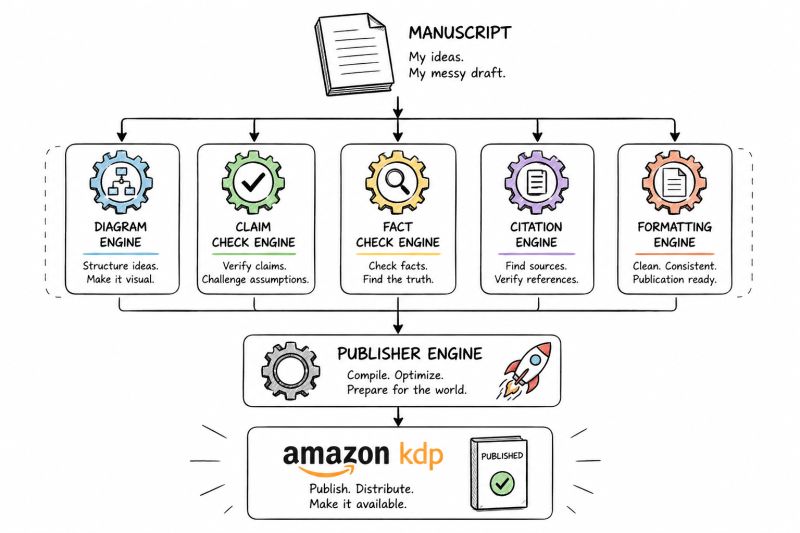
Recently, while finishing my book, I found myself repeatedly generating diagrams, checking citations, reviewing references, formatting chapters, and fact-checking claims. Instead of manually repeating those tasks over and over, I ended up creating a Diagram Agent, a Fact-Check Agent, an Editing Agent, and a Publishing Agent.
None of them were particularly complicated.
But each one eliminated an entire category of repetitive work.
A few months ago, I probably would have done most of those tasks manually. Building specialized tools and workflows simply cost too much time to justify.
Today, the calculation feels different.
The interesting decision is not whether something repeats.
It is estimating the magnitude of the work.
How much time will it consume?
How much context will it require?
How often will a similar problem appear again?
How much cognitive effort will it demand?
The better I get at estimating that magnitude, the easier it becomes to decide whether to do the work directly or invest a little effort upfront to build an engine.
That feels like a new decision point in the AI era.
In the past, building tools was expensive enough that most people defaulted to doing the work.
Today, creating the tool is often surprisingly cheap.
The question is no longer:
Can I build a tool?
The question is:
Is this problem large enough that I should?
Because that decision may determine whether you repeatedly perform the work yourself, or create something that performs it for you.