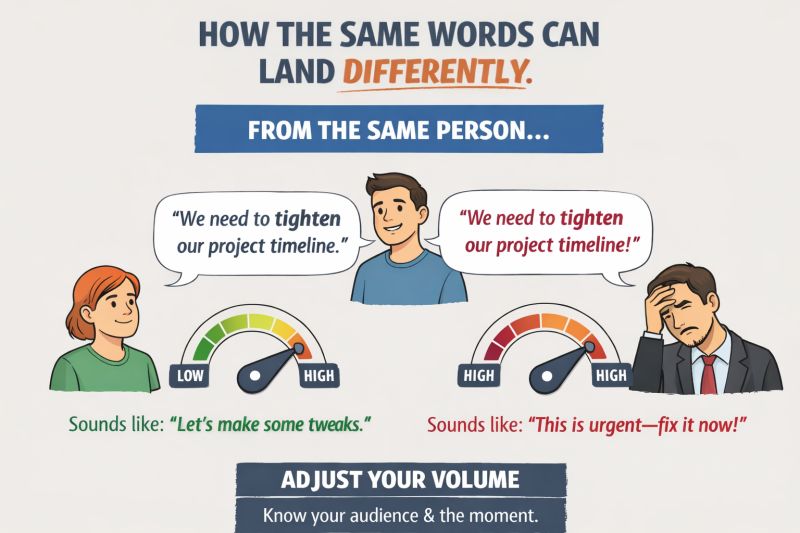
Leadership communication is like adjusting a speaker's volume
I’ve learned the hard way that the same sentence can land as a whisper for one person, and a siren for another.
Example: I once said, “We need to tighten our project timeline.”
To one person, it was a gentle nudge: “Cool — small adjustments.”
To another, it sounded like: “We’re in trouble — drop everything.”
And here’s the part I didn’t fully appreciate earlier in my career: as your title changes, so does your default volume.
A comment that used to be “one opinion” can suddenly become “the direction.” If you don’t calibrate, you can accidentally create urgency, anxiety, or chaos—without intending to.
One more twist: even the same person hears differently at different moments.
When someone is stressed, overloaded, or navigating change, their “volume sensitivity” goes up. The exact same feedback can feel heavier. When they’re steady and resourced, it lands proportionally.
Working Theory (2): the job isn’t just choosing the right words—it’s tuning the volume for the person and the moment, so the message lands with clarity and respect.