From Software Engineering to Knowledge Engineering
Over the past week, I spent more than 30 hours working through performance calibration.
I reviewed PRs, documents, self-assessments, project history, conversations, impact, risks, and all the small turning points that shaped each person’s year.
But something felt different this time.
I was not really “writing” calibration notes.
I was engineering them.
Each person had a set of stories and evidence. I would ask AI to:
Merge B3 into B2.
Split B4.
Strengthen B5.
Weaken B6.
Reframe B7.
Move one idea into another section.
Remove claims that did not have enough evidence.
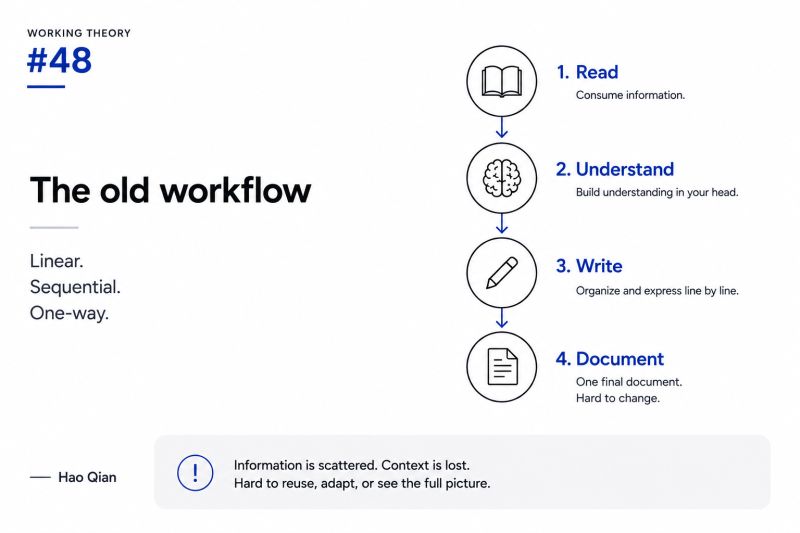
At some point, I realised that this was no longer a writing workflow.
It looked much more like software engineering.
The same thing is now happening when I write a book, build a business proposal, create a website, publish a children’s book with my daughter, or organise a complex decision.
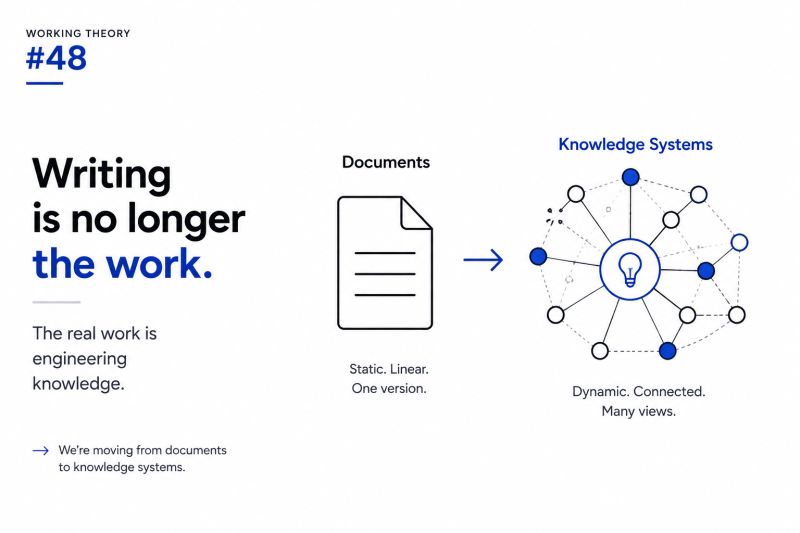
The document is no longer the real object.
The real object is the knowledge system underneath it:
Ideas.
Evidence.
Stories.
Claims.
Relationships.
Context.
Audience.
Tone.
The final document is only one possible view.
A book, a proposal, a performance review, a LinkedIn post, a presentation, or a podcast can all be rendered from the same underlying knowledge structure.
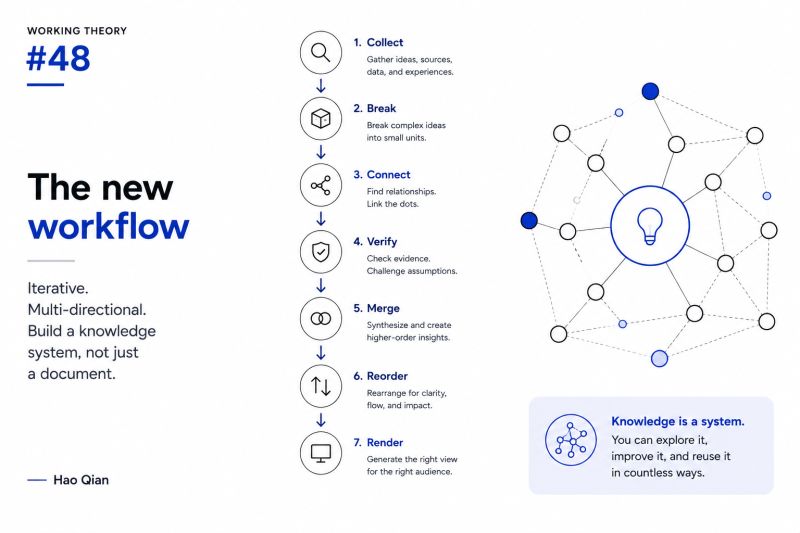
AI does not only help us write faster.
It allows us to break complex ideas into smaller units, connect them, challenge them, merge them, remove weak claims, reorder the structure, and generate the right view for the right audience.
Maybe this is the next evolution of knowledge work.
Not just writing.
Knowledge engineering.
Swipe through the slides for the full idea.