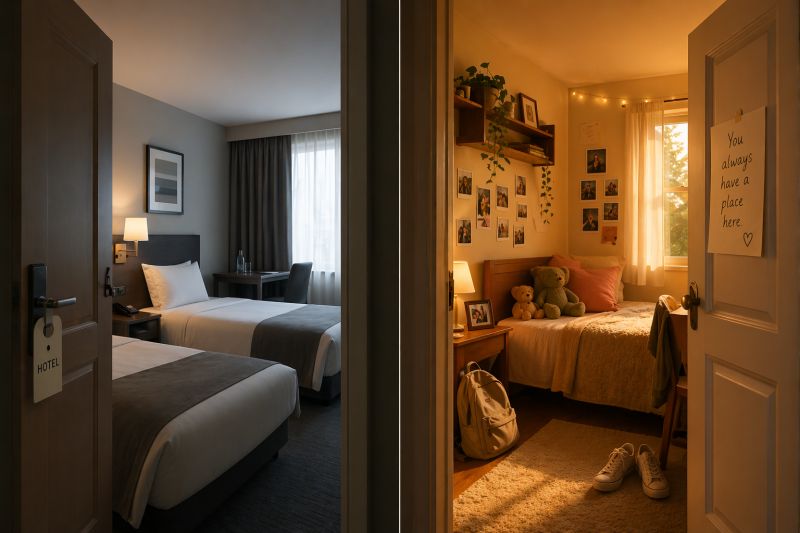
The Reserved Room Theory
A parent says to their child:
“No matter where you go, there will always be a room for you here.”
It’s a simple sentence.
But it means everything.
---
Now imagine a different offer:
“No matter where you go, we’ll give you money for a hotel.”
Clean room.
Warm food.
Good service.
---
Technically, it solves the same problem.
But it doesn’t feel the same.
Not even close.
---
Because the room is not just physical space.
It’s cognitive space.
It means:
“I am holding a place for you in my mind.”
No matter where you are.
No matter what happens.
---
That’s why it feels powerful.
---
And this doesn’t just apply to families.
It applies to any relationship
that plays a meaningful role in your life.
---
At work, you see it too.
The people you work best with
are not just the ones you talk to often.
They’re the ones you’ve made space for.
You know:
- what they’re trying to achieve
- what they’re worried about
- where they’re under pressure
---
You’re not just reacting to what they say.
You’re relating to what they’re dealing with.
---
That’s what creates trust.
That’s what creates alignment.
---
Strong relationships are not built
by more communication alone.
They’re built by how much space
you reserve for someone in your mind
even when they’re not in the room.